

The evolution of pickleball: history and modern growth
Learn how the evolution of pickleball transformed the sport from a backyard pastime into a fast-growing modern competitive game.
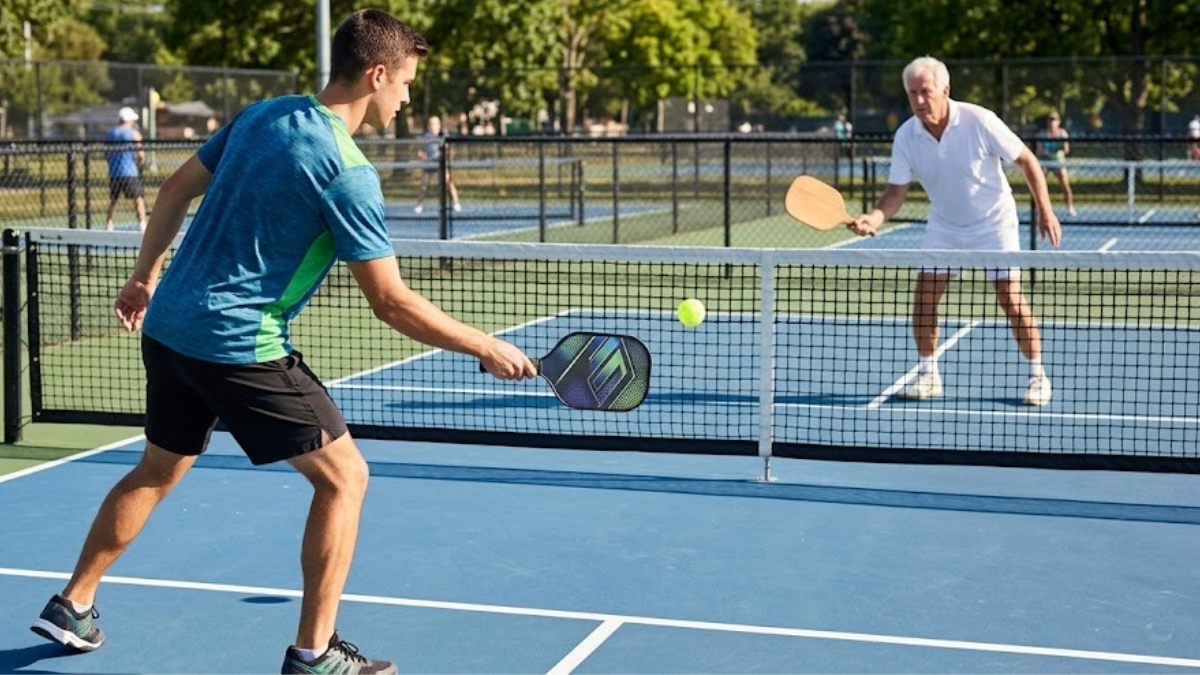
Many sports experience gradual growth over decades before reaching mainstream attention. Pickleball followed a very different path.
What started as a simple backyard activity has rapidly evolved into one of the fastest-growing sports in the world. The modern version of the game now includes advanced paddle technology, high-speed hand battles, structured training systems, and increasingly sophisticated strategy.
For many recreational players, the speed of this evolution has been surprising.
Players who first learned the game years ago often notice that rallies feel faster, opponents attack more aggressively, and modern strategy requires much more intentional decision-making than before.
Understanding the evolution of pickleball helps explain why the game feels so different today — and why players are approaching improvement much more seriously than in earlier stages of the sport.
The slow early growth of a family pastime
Many newer players assume pickleball is a recently invented sport because of its sudden popularity.
In reality, the game was created back in 1965 on Bainbridge Island, Washington state, by Joel Pritchard, Bill Bell, and Barney McCallum.
The original goal was simple: create a fun activity for their families using whatever equipment they had available.
Using wooden paddles, a perforated plastic ball, and a lowered badminton net, they unintentionally created a sport that would eventually become a global phenomenon.
For many years, however, pickleball remained relatively small.
The sport mostly existed in:
- Local recreation centers
- Retirement communities
- School physical education programs
- Community courts
Without major media attention or professional competition, the broader sports world often dismissed pickleball as a casual backyard game rather than a serious athletic activity.
As a result, competitive development remained limited during the sport’s early years.
How outdated stereotypes capped the game’s competitive growth
One of the biggest obstacles during the early evolution of pickleball was perception.
Because the court is smaller than a tennis court and doubles play limits full-court running, many athletes assumed the game required very little athleticism or strategic depth.
The sport became heavily associated with retirement communities and low-impact recreation.
That stereotype slowed competitive growth for years.
Many athletic players overlooked the game entirely because they assumed it lacked:
- Speed
- Power
- Strategy
- Technical complexity
- Fast-paced exchanges
At the same time, players who wanted to improve seriously had very limited access to:
- Coaching
- Structured drills
- Video analysis
- Organized training systems
This often created frustration for improving players who felt stuck between casual recreational play and competitive development.
Without stronger technical models or training resources, many players developed inconsistent mechanics and inefficient movement patterns that limited long-term progress.
The modern boom and athletic shift
The biggest turning point in the evolution of pickleball came during the last decade.
As younger and more competitive athletes entered the sport, the pace and intensity of the game changed rapidly.
What many people once viewed as a slower social activity became a fast, highly strategic sport built around:
- Hand speed
- Court positioning
- Transition play
- Shot selection
- Controlled aggression
Modern pickleball now involves much faster exchanges than earlier eras of the game.
Players regularly incorporate:
- Topspin drives
- Aggressive counters
- Fast speedups
- Offensive transition play
- Advanced reset techniques
The modern game rewards players who can balance patience and control with quick offensive pressure.
Because of this shift, many players now approach training much more intentionally than before.
Players who rely only on casual open play often struggle to keep up with the increasing pace and strategy of the modern game.
For players trying to adapt to faster rallies and more physical movement demands, structured preparation has become increasingly important. Incorporating targeted fitness exercises for pickleball can help improve lateral movement, balance, and recovery during high-speed matches.
Key historical milestones that shaped the game
Understanding the major milestones in pickleball history helps explain why modern strategy developed the way it did.
The invention on Bainbridge Island
The sport’s origins were surprisingly simple.
After returning home from golf in 1965, Joel Pritchard, Bill Bell, and Barney McCallum found their families looking for something to do.
Using an old badminton court, wooden paddles, and a plastic ball, they began experimenting with gameplay.
Several elements quickly became clear:
- The plastic ball bounced well on the asphalt
- Longer rallies made the game more enjoyable
- The smaller court encouraged faster reaction exchanges
- Simpler equipment made the game highly accessible
Within days, the group began formalizing basic rules and shaping the foundation of the sport.
Even in its earliest stages, the game emphasized control, rally tolerance, and placement rather than overpowering opponents.
The birth of official rules and governing bodies
As pickleball spread into more communities, standardization became necessary.
Different courts and local groups were often playing with slightly different rules, which made organized competition difficult.
The first official rulebook helped create consistency across the growing sport.
Later, governing organizations such as the USAPA helped establish:
- Tournament standards
- Official ratings
- National competition structures
- Rule consistency
One of the most important strategic rules was the formalization of the non-volley zone, commonly called the kitchen.
This single rule prevented players from standing directly at the net and smashing every ball aggressively.
As a result, the game evolved around:
- Dinking
- Patience
- Soft game control
- Transition play
- Strategic positioning
Many of the strategic patterns seen in high-level pickleball today developed because of this rule structure.
Shifting from casual play to structured training
As pickleball became more competitive, the training culture evolved alongside it.
Years ago, many players improved mostly through games alone.
Today, players increasingly use structured systems to improve specific skills intentionally.
Modern players now spend time practicing:
- Third shot drops
- Resets
- Transition movement
- Speedup recognition
- Counterattacks
- Kitchen positioning
The rise of online coaching, video analysis, and structured drilling has accelerated player development significantly.
Players now understand that improvement is not only about playing more games.
It is also about developing:
- Better mechanics
- Smarter decision-making
- Court awareness
- Movement efficiency
- Consistency under pressure
As the game continues evolving, physical preparation is becoming more important as well.
Many players now incorporate:
- Recovery work
- Mobility training
- Strength development
- Nutrition support
- Injury prevention exercises
into their overall improvement process.
The modern game places much greater physical and strategic demands on players than earlier versions of pickleball did.
Conclusion
The evolution of pickleball from a simple backyard activity into a globally recognized competitive sport has changed how players approach the game entirely.
Modern pickleball now combines:
- Accessibility
- Strategy
- Athleticism
- Fast-paced exchanges
- Structured skill development
As the sport continues evolving, players who improve intentionally often adapt faster than players who rely only on casual repetition.
Understanding the history of the game also helps players better understand where modern strategy, training systems, and equipment trends came from.
But learning about the game is only one part of improvement.
Applying structured training, improving decision-making, and developing better mechanics are what ultimately help players perform more consistently on the court.
For players looking to improve more efficiently through direct coaching and feedback, Bay Area pickleball lessons can help identify technical weaknesses, improve shot selection, and build stronger on-court habits.


Adapt your strategy to the modern game
Access video techniques, training drills, strategy breakdowns, and coaching resources inside the Bay Area Pickleball Skool community to continue improving with today’s evolving game.

Get free weekly coaching tips
Receive weekly coaching tips, updates on class schedules, product news, and more.
