

How to improve your third shot drops
Learn how to improve pickleball third shot drops with practical drills, technique tips, and common mistakes to avoid.
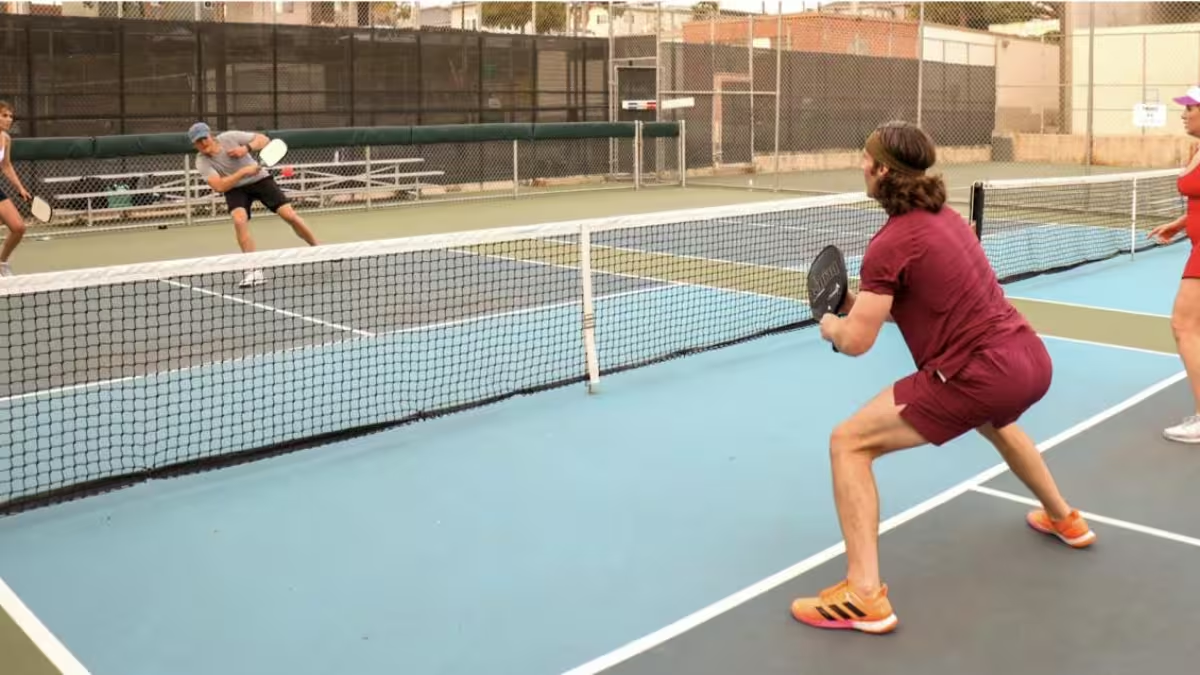
The pickleball third shot drop is one of the most important skills for players who want to move beyond the beginner level. Yet for many recreational players, they are also one of the most frustrating shots to learn.
A missed third shot often leaves your team stuck at the baseline while your opponents remain in control at the kitchen line. Even players with solid serves and groundstrokes can struggle to advance if their drops are inconsistent.
The good news is that improving your third shot drop is usually less about advanced technique and more about understanding the right fundamentals. Once you focus on the correct priorities, your consistency can improve surprisingly quickly.
Watch Ben Johns explain the key fundamentals of an effective third shot drop and demonstrate the mechanics in action.
Why so many players struggle with pickleball third shot drops
Most players first learn pickleball by trying to hit the ball hard.
That approach works reasonably well against newer opponents. However, as players around you improve, simply hitting harder often makes it harder to get to the kitchen.
The third shot drop requires a different mindset.
Instead of trying to win the point immediately, the goal is to neutralize your opponents’ advantage at the kitchen line and create an opportunity for your team to move forward.
Many players become frustrated because they expect the shot to be perfect. Developing more patience during rallies often starts with understanding broader concepts like shot selection and high-percentage decision-making.
In reality, successful drops force the opponent to hit upward or simply contact the ball below net height.
That is often enough to gain control of the rally and calmly advance to the kitchen rather than frantically.
What makes a successful third shot drop
One of the biggest misconceptions about pickleball third shot drops is that they need to be extremely soft and low.
A successful drop usually comes down to three things.
Arc and trajectory
The ball should travel with enough height to comfortably clear the net. 2–3’ is a good place to start.
Many missed drops occur when players try to skim the ball too close to the tape out of fear of hitting it too high.
A higher margin over the net generally leads to greater consistency. It is better to aim high than to aim too low and hit the net.
Depth and pace
Ideally, the ball lands somewhere close to or in front of the kitchen line.
However, a slightly deeper drop that stays low is often better than a perfect target that misses into the net. To make the transition to the kitchen easier, you want to think about hitting the ball slower and with more height.
With a slower ball traveling through the air, you can traverse more distance on the court, and your mind has more time to process where your ball is going and how effective it will be.
Focus on keeping the ball unattackable rather than on making it perfect. Aim to the opponent’s weaker side, or the weaker player. These will give you a better chance of making the shot.
Patience and simple mechanics
The purpose of the shot is to help your team move forward, not straight to the kitchen in one shot. When hitting drops, you want to stabilize your body, keep your swings simple, avoid excessive wrist movement and large backswings, and don’t rush to the net before you complete your shot.
Players who understand this tend to make better decisions and experience fewer unforced errors.
The most common mistakes that ruin third-shot drops
Hitting too hard
Many players use their normal groundstroke swing when attempting a drop.
This often causes the ball to travel too high or fast and sit up for an easy attack.
The third shot drop requires softer hands and a more controlled swing.
Aiming too close to the net
Trying to hit the perfect drop frequently leads to unnecessary net balls.
Most recreational players would immediately improve their consistency by aiming slightly higher over the net.
Giving yourself more margin for error is one of the fastest ways to be more consistent.
Poor body positioning
The best drops are not created entirely with the arm. They’re hit in front of the body, around hip height, with the weight leaning forward, not back.
Good balance, proper footwork, and controlled body movement help create a smoother and more repeatable shot.
Players who stay balanced through contact typically develop more reliable touch.
How to improve your pickleball third shot drops
Focus on height before precision
Many players obsess over landing the ball exactly on the kitchen line.
A better goal is simply clearing the net comfortably and consistently so that opponents cannot attack aggressively.
When practicing, prioritize height first. What target practicing, make sure your opponent contacts the ball below the shoulder. Once you can hit this target repeatedly, aim for below the hip next. Lastly, below the knee.
Learn to reset your tempo
Many missed drops happen because players rush and panic.
After serving and seeing the return, take a moment to settle your feet before hitting the third shot.
The extra fraction of a second often improves timing and contact quality. If the incoming ball comes back aggressively, back up quickly, stabilize the body, swing smoothly, and aim with more height over the net.
Practice from realistic court positions
Third shot drops should not only be practiced from stationary feeding drills.
Match conditions involve movement, pressure, and imperfect ball positions.
Practice:
- Moving forward and backward
- Hitting while recovering to neutral body position
- Contacting from different incoming ball speeds and heights.
- Transitioning toward the kitchen after contact
This creates skills that transfer directly into real games.
A simple third-shot drop drill you can use today
One effective drill requires only two players.
Player A starts at the baseline.
Player B stands at the kitchen line and feeds.
Player A hits a third shot drop and tries to advance to the kitchen.
The goal is to land five consecutive drops that force Player B to contact the ball below net height, before advancing to the kitchen.
As consistency improves:
- Player B can hit more offensively and move player A around more
- Alternate forehand and backhand drops
- Add transition zone resets after the drop
This drill develops both touch and decision-making, and timing.
When to hit a drop and when not to
The third shot drop is important, but it is not always the correct choice.
A deep return may create a perfect opportunity for a controlled drop.
A shorter return may allow for a drive instead.
Many strong intermediate players combine both options effectively.
The key is understanding the purpose of each shot.
Drops help your team gain court position.
Drives can create pressure and generate weak volleys or easier 5th shot drop opportunities.
Learning when to use each option is part of becoming a complete player. Strong court awareness helps players recognize whether a drop or a drive is the highest-percentage play in a given situation.
Consistency beats perfection
Players often believe advanced players make perfect drops every time. In reality, they miss less often and make better decisions.
A drop that lands slightly deeper but stays low is usually far more valuable than a perfect drop attempted too aggressively.
The goal is not perfection. The goal is reliability and to set up the next opportunity.
Building a third shot drop that you can trust under pressure will improve your overall game far more than occasionally hitting a highlight-reel shot.
Conclusion
Improving your pickleball third shot drops starts with understanding their true purpose.
You are not trying to hit a winner. You are trying to create an opportunity to move forward, establish a kitchen position, and begin controlling the rally.
Focus on height, consistency, and smart decision-making. Practice in realistic court positions, and allow yourself to prioritize reliability over perfection.
The best third shot drops are not necessarily the softest or most impressive. They are the ones you can trust repeatedly under pressure.
This shot is necessary to win at the 4.0 level and above.
Focus on creating enough height, giving yourself margin over the net, and practicing from realistic situations. Over time, consistency will do far more for your game than trying to hit the perfect drop every time.


Build a more reliable third shot drop
Develop better touch, consistency, and decision-making through private pickleball lessons designed around your current skill level and goals.
Get free weekly coaching tips
Receive weekly coaching tips, updates on class schedules, product news, and more.
